“I ask my goalkeeper to play as a sweeper keeper” is a phrase I hear during many conversations with coaches around the region and a quote I see often on Coaching Forums. One thing I don’t often see is any kind of explanation as to what the role of the “sweeper keeper” entails or how the team is set up to enable the goalkeeper to play as a “sweeper”. I have set out my opinions and observations on the role of the “sweeper keeper” in a hope to help others understand the role a little better.
Some people see the “sweeper keeper” role as one of the below:
- A goalkeeper taking up an aggressive start position and being quick off the mark to deal with any balls played in behind defenders
- A goalkeeper who is competent with their feet, can play under pressure and has a good range of distribution
I believe we can merge both above definitions and help build more creative, competent and intelligent players to add to their attributes as a goalkeeper.
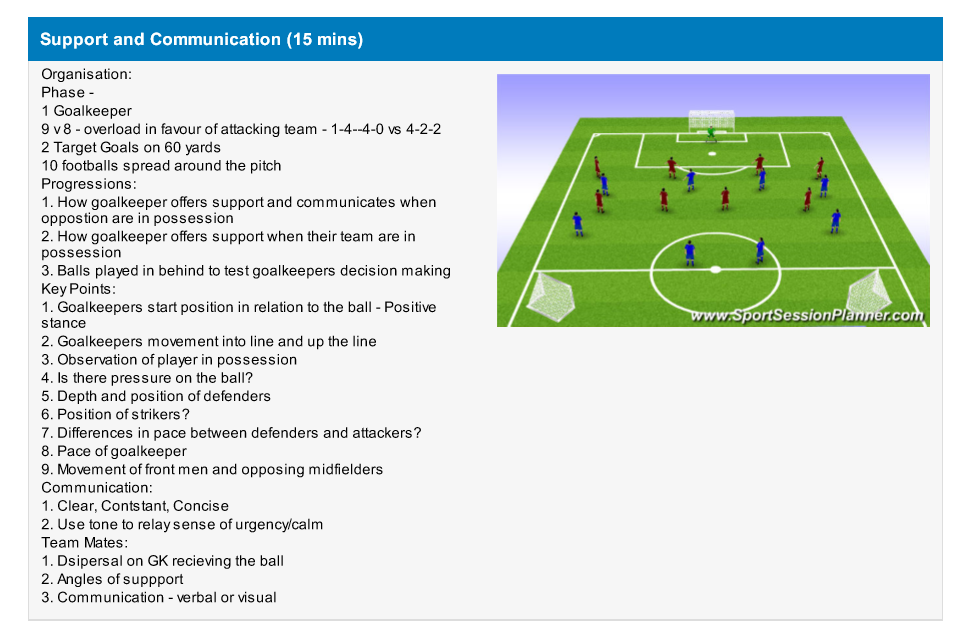
My opinion of the “sweeper keeper” is that this role should be changed to “support player”, a goalkeeper should always be in position to support play during in possession, out of possession and transition phases. The goalkeeper should always be on the move, assessing play, communicating and reacting to threats from the opposition. The reason I call the goalkeeper a “support player” is that they have the ability to support play during those 3 phases (in & out of possession and transitions).
We’ll look through the 3 phases below.
In Possession:
- Can the goalkeeper be an additional outfield player?
- Offer support deep and/or wide
- Communicate effectively to help orchestrate play
- Receive and distribute quickly to create overloads
- Good range of distribution
On playing back to the goalkeeper we should be looking for team dispersal to support in good areas of the field so that the goalkeeper has the opportunity to play:
- Through the opposition – play penetrative passes between opposition players or break lines
- Around – to move the ball effectively in preparation to penetrate
- Into – playing passes over the opposition directly to a team mate
- Onto – playing a pass in the air where there is a good chance of winning an aerial battle
- Beyond – Playing the ball into the space behind the oppositions back line
Out of Possession:
- Play a high line to defend the space in behind defenders to nullify any through balls or balls played beyond your back line
- Protecting the area against high balls into the box, low crosses or through balls
- Defend the goal as play progresses and there is the threat of a shot
- Communicate effectively to ensure your team mates are aware of their roles and of their surroundings
Transitions:
- On losing possession:
- Remaining in a positive position to effect play/nullify threats in behind
- Effectively organising team mates to restrict oppositions ability to counter early or create overloads
- If losing the ball in more dangerous areas, can the goalkeeper look to effectively defend their area or the goal.
- On regaining possession:
- Can the goalkeeper counter quickly and effectively?
- Can they support the player in possession/offer another passing option to player in possession?
- Ensure team balance in event of losing possession
Where should your goalkeeper be offering support?
In Possession:
- Your goalkeeper should be looking to offer support to teammates when your team is in possession. How high your goalkeeper supports depends on the location of the ball.
- When the ball is closer to their goal, the goalkeeper should be offering support deep and/or wide. Positioning themselves wide of the goal or in a position where a stray back-pass won’t immediately lead to a goal. Positioning themselves deep (creating depth) gives the goalkeeper a greater distance between themselves and the opposition player offering immediate pressure.
- As the ball transitions up the field, the goalkeeper should always look to support play by looking to keep clear passing lines between themselves and the ball. This time they should be looking to create depth which will allow them time to scan, receive and play a suitable ball to either keep possession or to play a penetrative pass.
- A goalkeeper must also look to communicate effectively, ensuring they communicate clearly, constantly and concisely in a calm manner.
Out of Possession:
- I work on the general rule of the 3 3rd’s. Breaking the pitch and the penalty area into 3rd’s, making sure the goalkeeper is in the correct 3rd of their box in relation to the 3rd of the pitch the ball is in. More confident goalkeepers can position themselves higher in each 3rd. This start position is also determined by the height or depth of your defensive line.
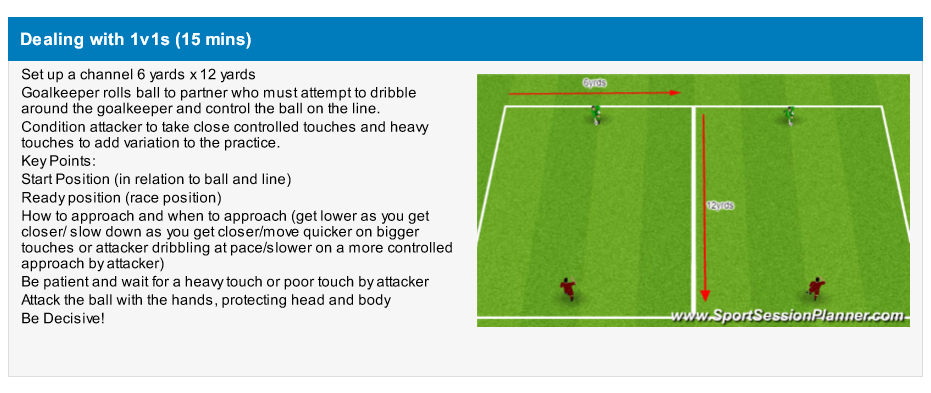
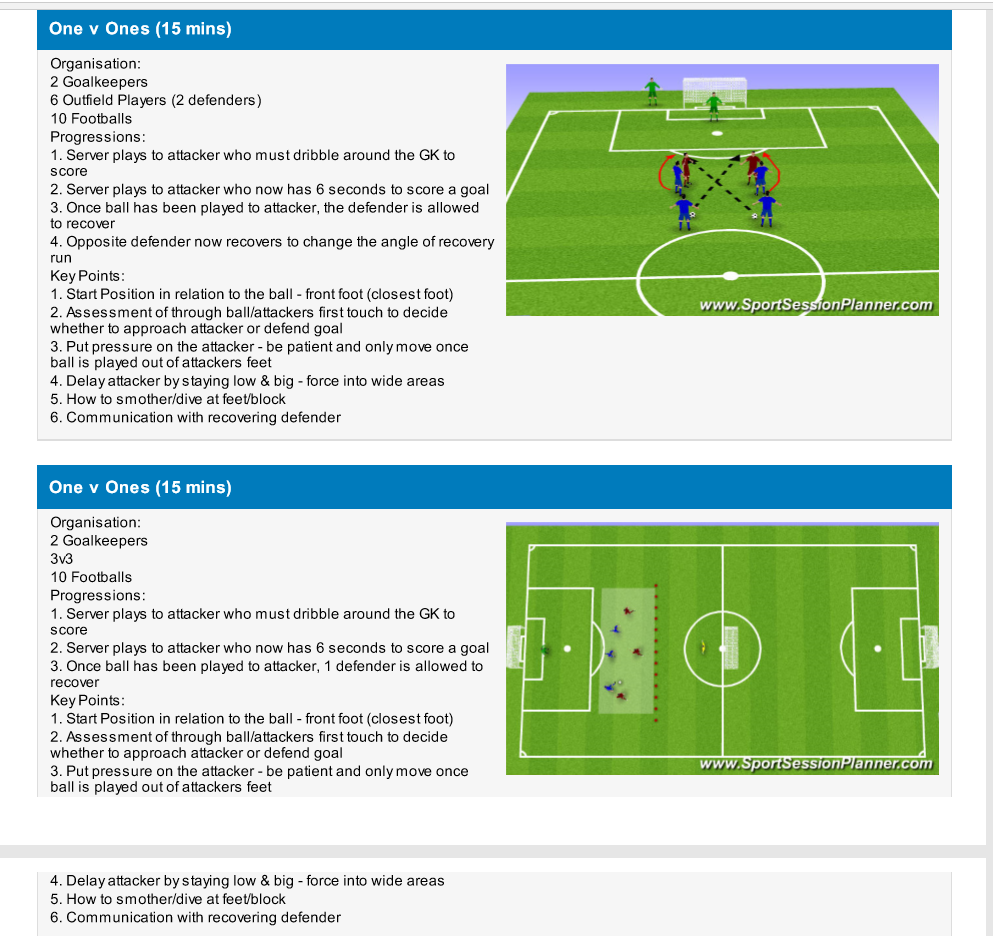
- The goalkeeper should be looking to play off the front foot (unless there is the threat of a shot) when the opposition are in possession. This means being prepared in a “race position” (one foot in front of the other) in preparation to deal with a penetrative pass, ball played in behind the backline or an opposition player running past the backline.
- Communication is also very effective during this phase to ensure team balance and compactness. This must be clear, constant and concise whilst also remaining calm.
Transitions:
- On regaining possession, the goalkeeper should look to support play as quickly as possible, offering support in wide/deep areas to the player on the ball whilst also ensuring team balance.
- On losing possession, can the goalkeeper remain in a positive position (3 3rd’s) on the front foot in anticipation of an early penetrative pass
How can you get your goalkeeper used to the role of a “support player”?
Goalkeepers are somewhat the forgotten player during many training sessions, but this doesn’t need to and certainly shouldn’t be the case going forwards. Yes, a goalkeeper’s main “job” is to stop the ball going in the back of the net, but isn’t prevention better than cure? Although it is inevitable that they will face shots during a game, can we (as a team) look to prevent shooting opportunities for the opposition? This can be done by giving your goalkeeper confidence in both their knowledge of the game, their roles during the 3 phases mentioned above and through giving them more confidence with their feet. If we (the team) have the ball, then the opposition can’t score.. right? But, if we walk onto the pitch with a goalkeeper who can’t play with their feet and is stuck to their goal line, we’re effectively playing a player down. Can we create a numerical advantage in possession and limit opportunities to expose the space in behind our back line due to the positive positioning of our goalkeeper out of possession?
By allowing your goalkeeper to work as part of the team during training you give them not only the ability but also the confidence to play as a support player during games. Putting them into an environment where they can play with their feet both under pressure and in a realistic environment will give them the confidence and make them competent in the role of the support player.
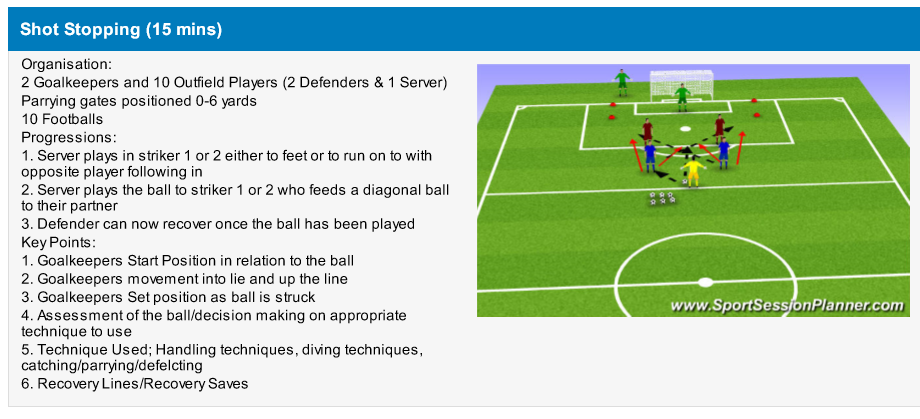
Play goalkeepers in Rondos, put them into possession practices in end zones, practices that allow them to build confidence in supporting play in possession, out of possession and during transitions. Position yourself where you can see what the goalkeeper can see and even walk/talk them through practices whilst encouraging positive behaviours. We must also remember that the goalkeeper still has the job of keeping the ball out of the net and this must not be neglected during training, however, a goalkeeper must not only be placed in goal for “shooting practice”. They must be placed in more realistic scenarios or scenarios in which they can develop their all-round game.
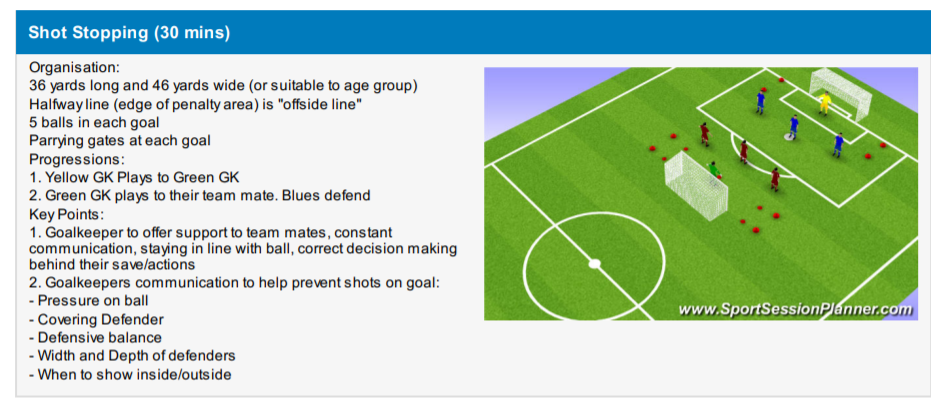
Practices like those below will help the goalkeeper with all the above: